What a small shop can actually do
Being small is not a marketing position. It changes what is genuinely possible, in both directions, and the honest version of that argument has to include what a small shop cannot do.

Small is an easy word to put on packaging and a harder one to actually mean anything by. Most of what gets claimed under it, warmth, care, craft, is unfalsifiable in exactly the way a freshness claim is unfalsifiable. It is worth being specific instead about what being a small, single-location shop actually changes, mechanically, about how coffee gets from a sack of beans into somebody's kitchen, and where that shape runs out of road.
What smallness makes possible
The clearest advantage is sequencing. A shop that roasts, blends, grinds and packs everything in-house can put the grinding step after the order rather than before it, because there is no distribution chain in between that requires stock to be ground and sitting on a shelf in advance. That is a genuine structural difference, not a marketing gesture: a large brand shipping to a national network of stores has to grind ahead of demand, because grinding after the order would mean an empty shelf. A shop the size of a single counter on one street does not have that problem, because the order and the counter are in the same room.
The same shape also allows something closer to a conversation than a transaction. A customer can ask for a specific size, a specific ratio, a bulk order roasted for the occasion, and the answer does not have to travel up a chain of approvals to be granted. More than five thousand customers a month pass through that model, which is enough volume that "small" clearly does not mean "marginal." It means the decisions are still made in the shop, not in a regional office somewhere else.
A small shop is not simply a smaller version of a large one. It is a different shape, with different edges.
What it genuinely cannot do
The honest half of this is that the same shape closes doors a larger operation would have open. A single shop cannot buy raw coffee in the volumes that let a national roaster negotiate the lowest possible price, and it should not pretend that its prices are competing on that basis. It cannot offer round-the-clock ordering, next-day delivery across a country, or the kind of supply chain redundancy that means a single shop closing for a day does not stop anyone's order.
- Cannot match the raw-material buying power of a national-scale roaster.
- Cannot offer the delivery speed or redundancy of a multi-location supply chain.
- Cannot be reached at every hour, because it is one shop, not a network.
The trade, stated plainly
None of that is a complaint. It is the actual trade a small shop is offering, and it only holds up as an honest claim if both sides of it are on the table. What is gained is a shorter distance between the person who wants the coffee and the person who makes it, and a set of decisions, what to grind, when, how much, that stay close to the counter instead of moving up a chain of approvals. What is given up is scale: the pricing power and the reach that scale buys. A shop that only tells you the first half of that is selling a mood. Telling you both halves is the only version of "small" that actually means something.
From the shop
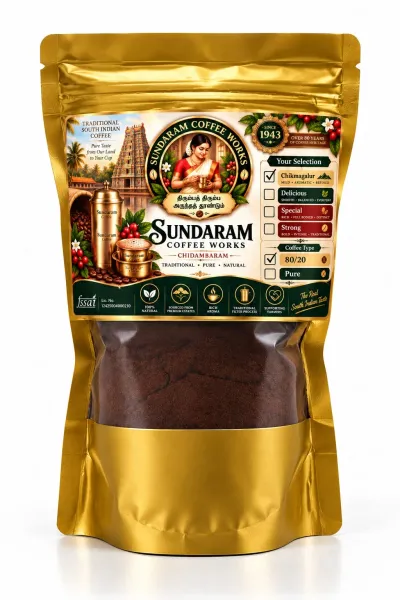
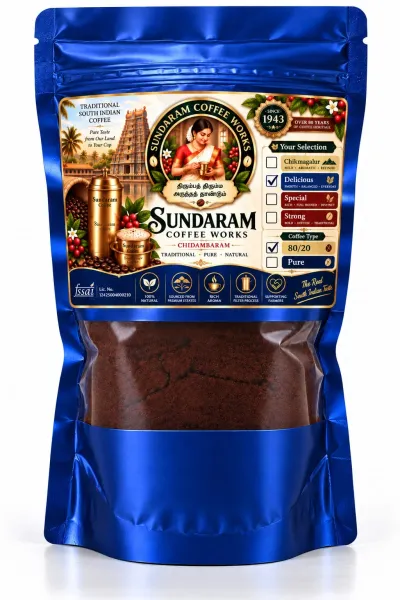
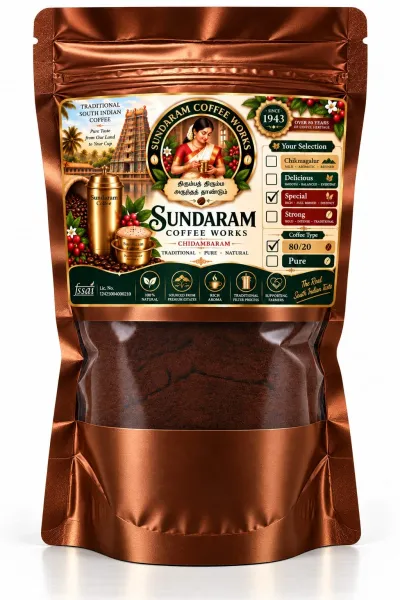
Our coffees, 80:20 with chicory
Ground and packed fresh, only after you order.
More essays
 Chicory's two livesIn parts of Europe, chicory in coffee is remembered as a wartime substitute. In South Indian filter coffee, many people drink it by choice.2 min read
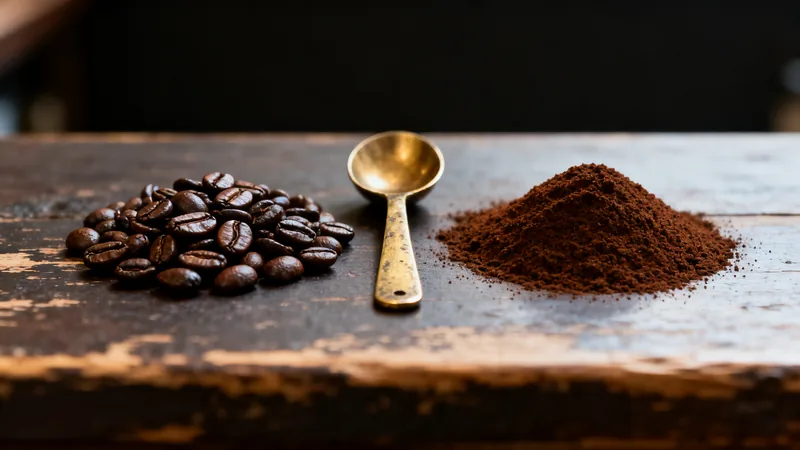 What “fresh” actually promisesAlmost every coffee pack claims to be fresh, and almost none of those claims can be checked by the person holding the pack. Here is what the word can honestly stand behind.3 min read
 Objects built to be pouredSet aside what the tumbler and dabarah are used for and judge them only as design, and they turn out to be solving a harder problem than a cup and saucer ever had to.3 min read