Chicory's two lives
In parts of Europe, chicory in coffee is remembered as a wartime substitute. In South Indian filter coffee, many people drink it by choice.
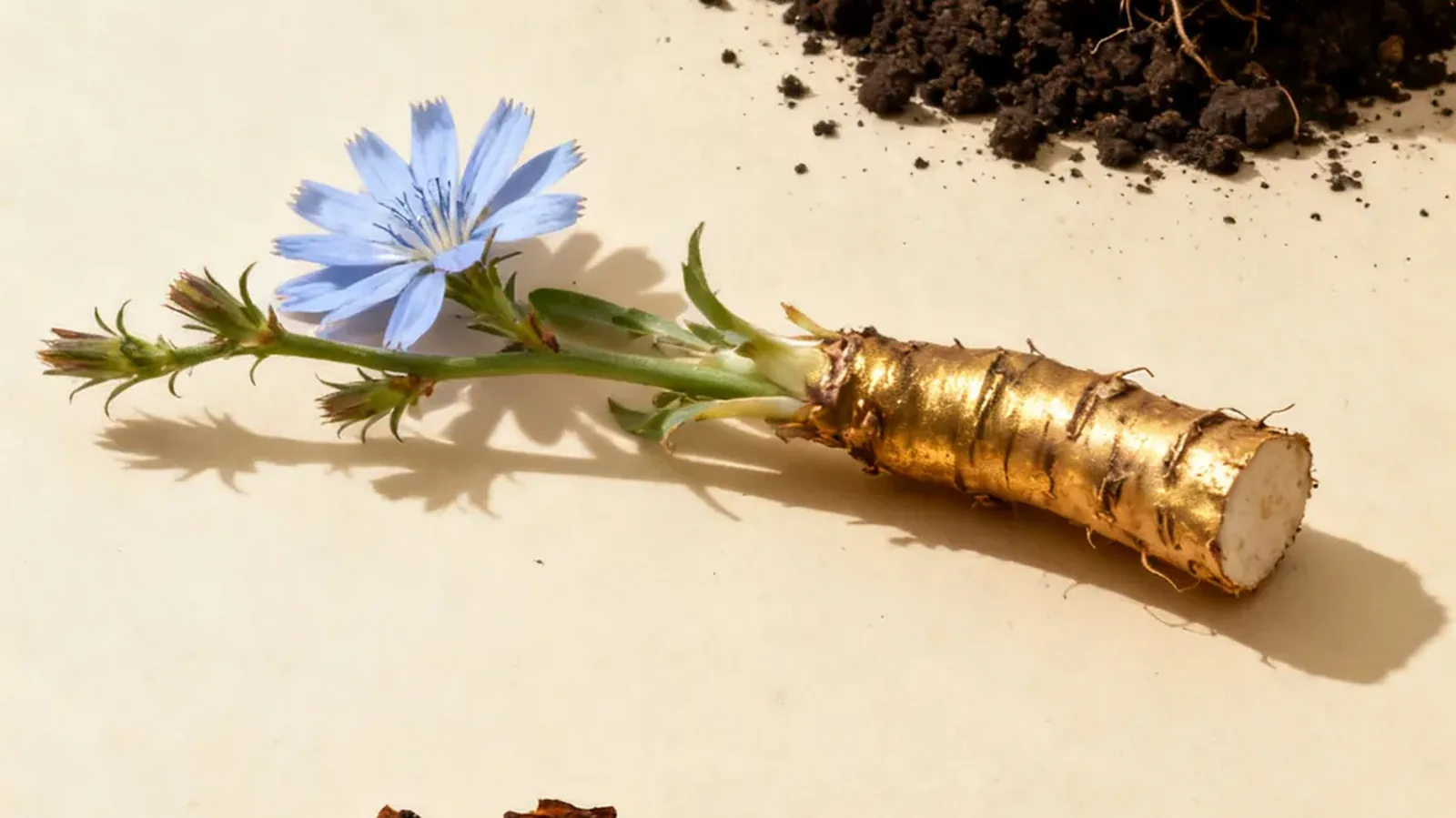
Chicory has had two very different careers in coffee, and they point in almost opposite directions. Looking at both makes the South Indian taste for it easier to understand.
A substitute born of shortage
In parts of Europe, roasted chicory root entered the coffee pot during periods when coffee itself was scarce or expensive: blockades, wars, rationing. Chicory was cheap to grow locally, roasted and ground much like coffee, and dark enough to pass a glance. Stretching a small amount of real coffee with a larger amount of roasted chicory was a way to make an expensive, imported good go further, or to have something that resembled coffee at all when none could be had.
That history left a mark on how chicory is talked about in those places even now. It is remembered as the coffee people drank because they had to, not because they preferred it, and once shortages ended, plenty of drinkers went straight back to coffee alone. Chicory, in that story, is a stand-in that outlived its usefulness the moment the real thing became available again.
One story ends with chicory being dropped the moment real coffee returns. The other does not end that way at all.
A preference, not a shortage
Whatever first brought chicory into South Indian coffee, the picture today is different. Coffee is grown close by, in the hill regions of Karnataka and Kerala, and 100% coffee is easy to buy. Many households still choose a blend with chicory. That is not the story of a substitute nobody could wait to retire. It is a cup people pick on purpose.
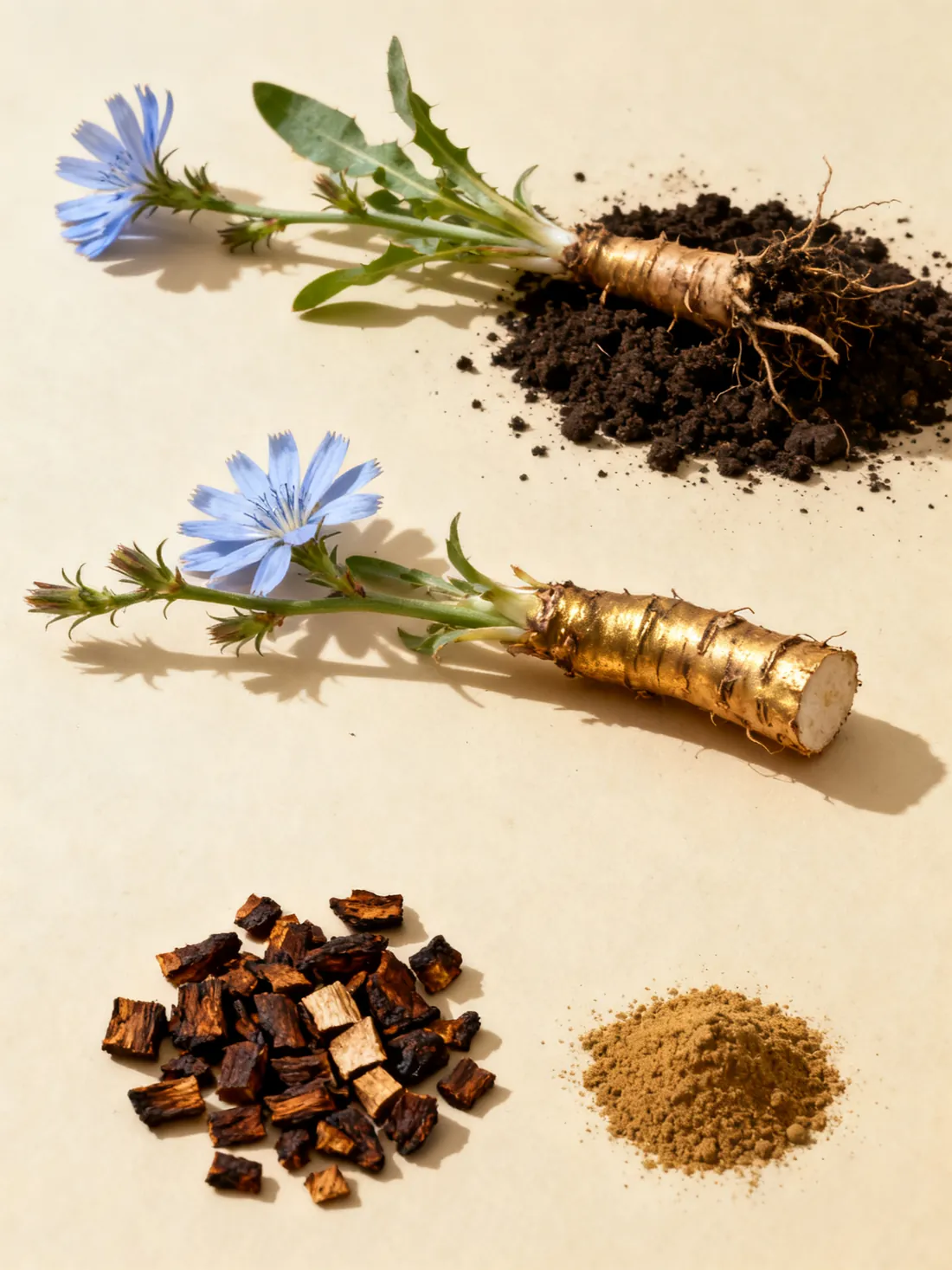
The reason is straightforward once you taste the two side by side. Chicory brings colour, body and a rounder bitterness that holds up unusually well against hot milk and sugar, which is most of what a filter coffee cup is built on. A blend of 80% coffee and 20% chicory is not a diluted cup of coffee. It is a different, deliberately built cup, and for a lot of people who grew up drinking it, coffee without the chicory tastes like something is missing rather than something extra has been removed.
Why the word still carries baggage
Because chicory's reputation in one part of the world is tied to scarcity, it is easy to import that association and assume any coffee with chicory in it must be a cheaper, lesser version of "real" coffee. That assumption does not survive contact with how the ratio is actually used in South India, where 100% coffee and 80:20 sit side by side on the same shelf as two different characters rather than two different tiers. Someone buying 80:20 is usually choosing the cup they grew up on, and chicory's odd double life, substitute in one country, preference in another, is really a story about how the same ingredient can mean two completely different things depending on why it showed up in the first place.
From the shop
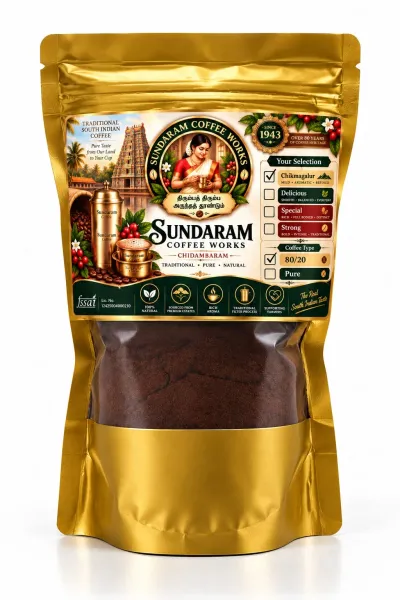
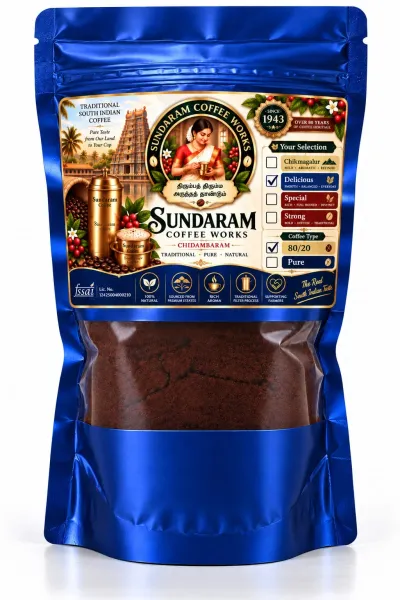
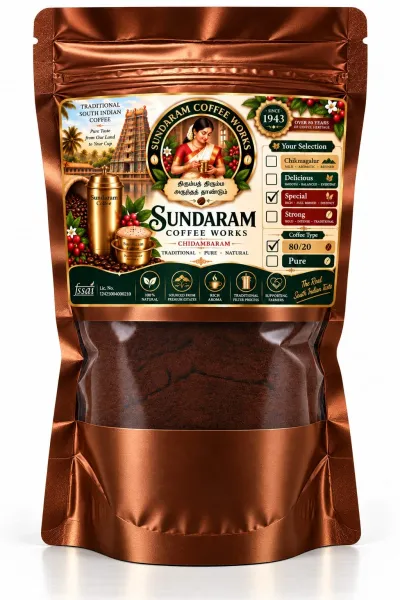
Our coffees, 80:20 with chicory
Ground and packed fresh, only after you order.
More essays
 What “fresh” actually promisesAlmost every coffee pack claims to be fresh, and almost none of those claims can be checked by the person holding the pack. Here is what the word can honestly stand behind.3 min read
 Objects built to be pouredSet aside what the tumbler and dabarah are used for and judge them only as design, and they turn out to be solving a harder problem than a cup and saucer ever had to.3 min read
 Why the hand filter is still in the kitchenEspresso machines and electric filter-coffee makers are easy to buy, and some homes use them. Many South Indian kitchens still reach for the plain metal filter first, and taste is only part of why.3 min read