Why the hand filter is still in the kitchen
Espresso machines and electric filter-coffee makers are easy to buy, and some homes use them. Many South Indian kitchens still reach for the plain metal filter first, and taste is only part of why.
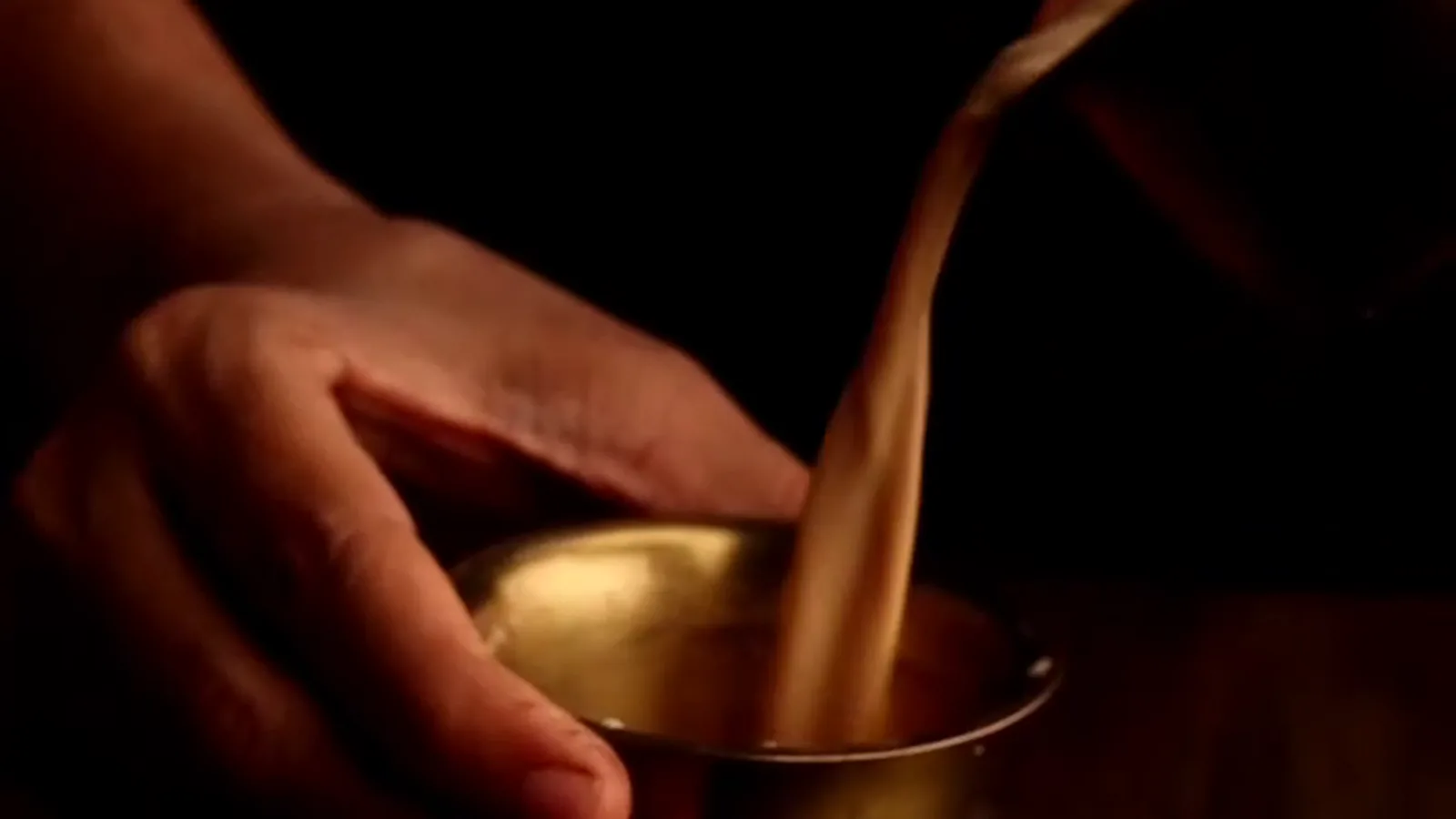
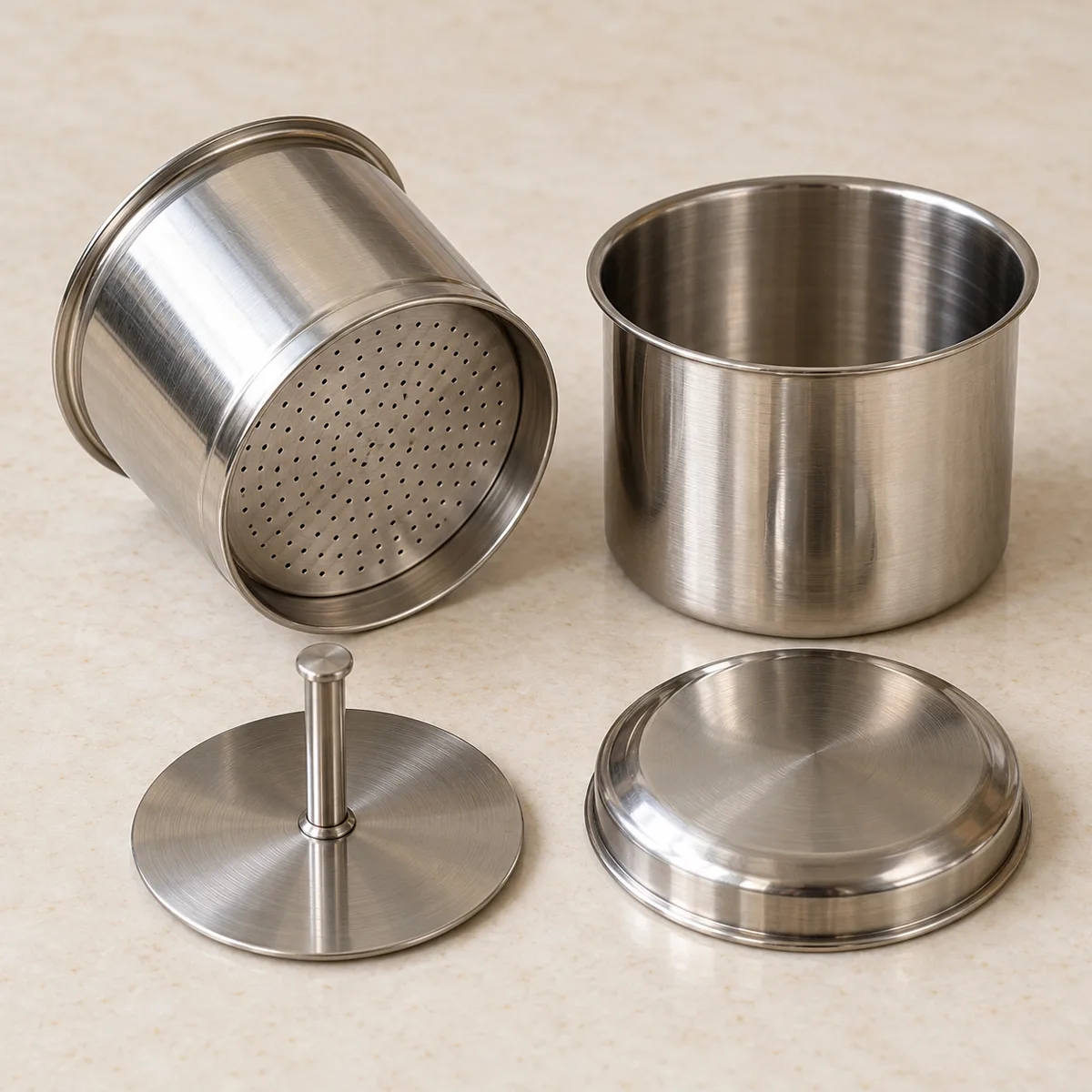
It would be easy to explain this by taste alone: filter coffee tastes like filter coffee, espresso tastes like espresso, and people who grew up on one prefer it. That is true, but it is not the whole answer, because taste preferences move. Cities that drank one thing a generation ago now sell three. In many South Indian household kitchens, the thing on the counter is still a two-part metal cylinder that does nothing except hold coffee still while gravity does the work. Electric filter-coffee makers exist and some homes use them happily; this essay is about why so many others have not switched.
Two different problems being solved
An espresso machine exists to solve a commercial problem: produce a strong, consistent shot of coffee in under thirty seconds, on demand, for a queue of people who are not going to wait. It needs pressure, a heating element, a pump, and someone trained to run it. Every part of its design answers to speed and repeatability at a counter.
The filter was never trying to answer that question. It was built for a kitchen, for one household, where the coffee is not competing with a queue. Its design answers to a completely different brief: needs no electricity, has no moving parts to fail, can be run by anyone who can pour hot water in a straight line, and costs a fraction of what a machine does. Judged against the job espresso does, the filter looks primitive. Judged against the job it was actually built to do, it is closer to complete.
A filter does not need to win the argument espresso is having. It was never in it.
What the machine could not absorb
There is also a structural reason espresso struggles to replace the filter rather than simply sit beside it: South Indian filter coffee is not a single-step drink. The decoction, the hot milk, the sugar and the long pour between tumbler and dabarah are four separate operations that meet at the end. An espresso machine automates the first of those beautifully and has nothing to say about the other three. Swap in a machine for the filter chamber and a household would still be heating milk by hand, still pouring back and forth to cool and froth it, still deciding how much sugar by eye. The part of the process the machine is good at turns out to be a small fraction of the actual ritual.
- No electricity needed, which matters everywhere power is not guaranteed.
- No training required beyond what any adult in the house already knows.
- A cost low enough that owning one is not a decision, in the way owning a machine is.
- Nothing to service, repair or replace beyond the filter itself.
Side by side
Espresso has not failed to arrive in South India. It sits in plenty of the same cities, often the same streets, as filter coffee, and plenty of people drink both without feeling any contradiction in it. In many homes the hand filter has not been edged out, because the two are not really competing for the same job. One is a fast, standardised shot built for a counter. The other is a slow, home-made sequence built for a kitchen with time in the morning. A machine that does the first job extremely well is not automatically the answer to the second.
From the shop
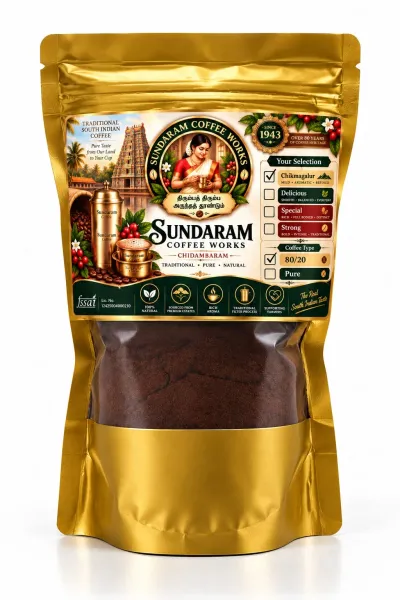
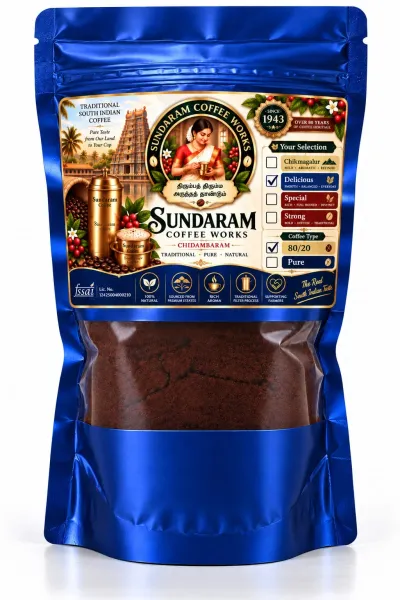
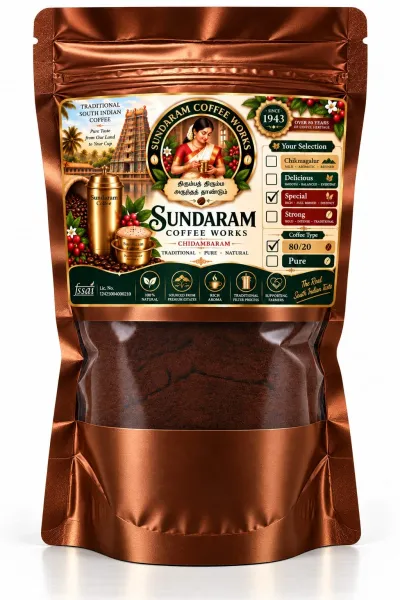
Our coffees, 80:20 with chicory
Ground and packed fresh, only after you order.
More essays
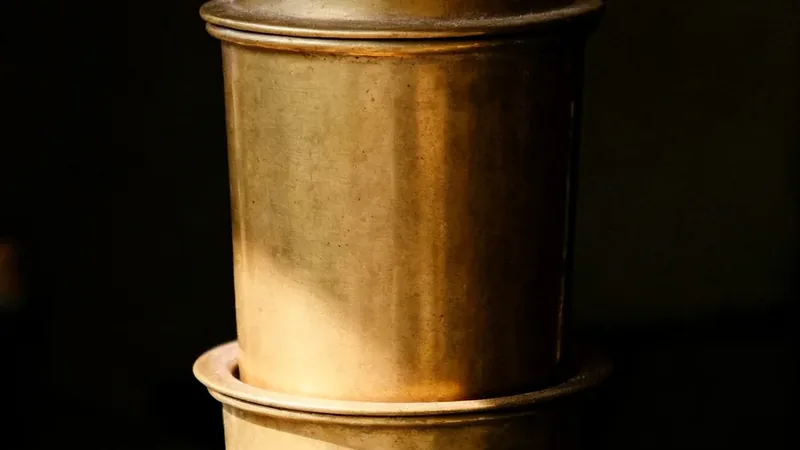 The twenty minutesFilter coffee is one of the few things left in a house that refuses to be rushed, and that refusal is doing more work than the coffee itself.3 min read
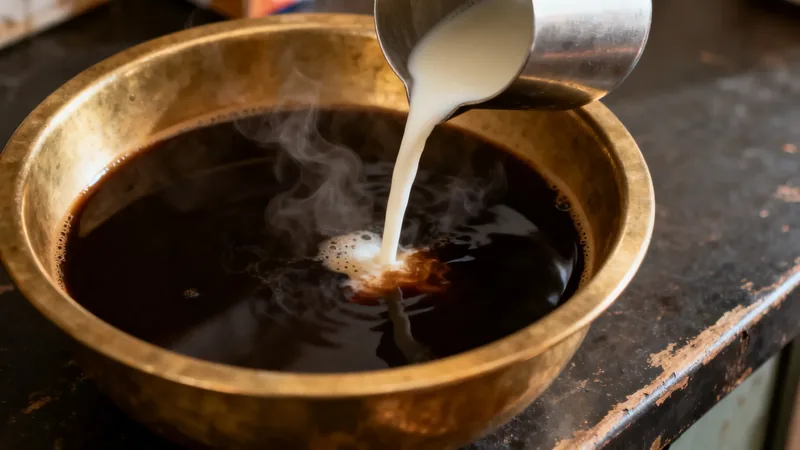 A case for drinking coffee out of metalCeramic and paper won the argument in most places coffee is drunk. Metal is still how South India takes its filter coffee, and that holdout is worth defending on its own terms.3 min read
 Reading a coffee pack properlyA coffee pack states more than most people read, and stays quiet about more than most people notice. Here is how to read all of it, not just the ratio.3 min read