The twenty minutes
Filter coffee is one of the few things left in a house that refuses to be rushed, and that refusal is doing more work than the coffee itself.
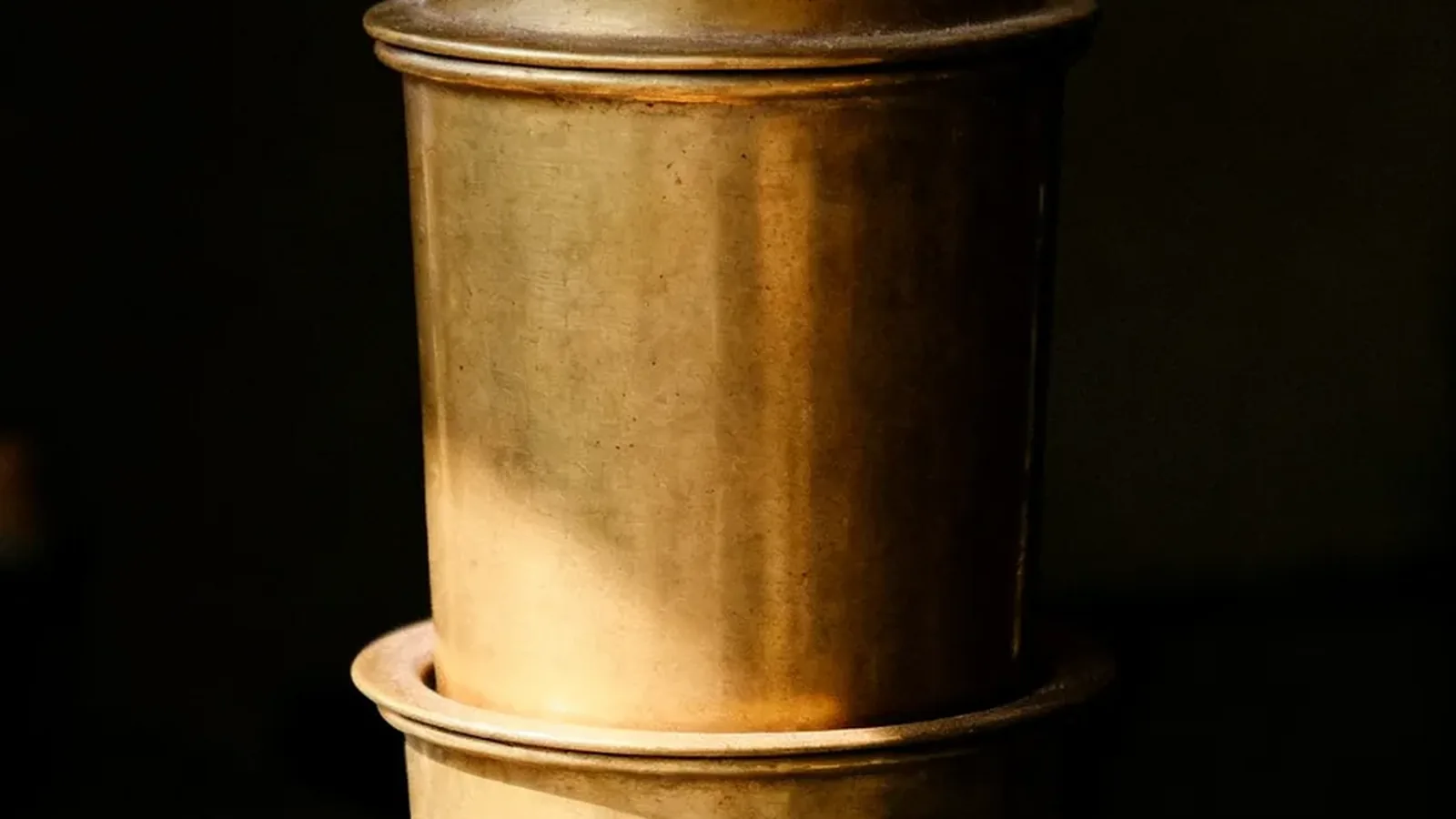
A South Indian filter does not brew coffee quickly under any circumstances. Water goes in hot, the lid goes on, and then the household waits while it drips through a bed of grounds under nothing but its own weight. There is no setting that speeds this up. The filter has one method and it takes about twenty minutes, whether the first person is awake at five or at seven.
It is worth asking what that twenty minutes is actually for, because it is not for the coffee. The coffee would survive a faster method. What the wait does is impose a shape on the part of the day that has the least shape to begin with: the stretch between waking and leaving.
A fixed point in an unfixed hour
Most of a morning is negotiable. Whether the bath comes before or after the newspaper, whether the children are woken now or in five minutes, whether the floor gets swept today or tomorrow: all of it can slide. The filter does not slide. Once the water goes in, the decoction arrives on its own schedule, not the household's, and everything else quietly rearranges itself around that one fixed point.
That is a useful kind of anchor. A morning with one immovable event in it is easier to run than a morning with none, because everything else can be measured against it: this happens before the coffee, that happens after. The filter does not need to be interesting to do this job. It only needs to be reliable.
The waiting is not a delay in the method. It is the one appointment the morning cannot break.
What gets done in the gap
Twenty minutes is long enough to matter and short enough not to be wasted on its own. It is exactly the length of a bath, or the first read of a newspaper, or getting a child into a uniform. People do not stand and watch a filter drip. They do something else next to it, and the something else is shaped, loosely, by how long the filter will take. Take the filter away and that structure does not simply survive on its own. Something else would have to hold that slot, and nothing else in a kitchen asks so little while demanding so much patience in return.
This is also why instant coffee and filter coffee are not competing for the same moment, even in houses that keep both. Instant is for when there is no twenty minutes to give: a late start, a guest who cannot be kept waiting, a second cup mid-morning. Filter coffee is for the twenty minutes that the household has decided, consciously or not, that it can afford. Choosing to make filter coffee on a given morning is partly a decision about the coffee and partly a small vote that this particular morning has room in it to wait.
A wait that will not be optimised
Almost everything else that used to take time in a kitchen has been shortened. Grinding, once a job with a stone and an arm, is now done by a machine in seconds. Heating water is instant. The one step in the whole sequence that has not been sped up in any meaningful way, anywhere, is the drip itself, and it is not for lack of trying: pressure brewers and machines exist that produce a strong, dark coffee in under a minute. They are not what most South Indian kitchens reach for in the morning, and the reason is not really about how the coffee tastes at the end.
It is that a fast method gives the morning back its shapelessness. Twenty minutes of nothing happening, on purpose, in a house that otherwise runs on getting things done, is a small daily reminder that not everything has to be efficient to be worth keeping. That is a strange thing for a beverage to provide. It is also, for a lot of households, the actual point.
From the shop
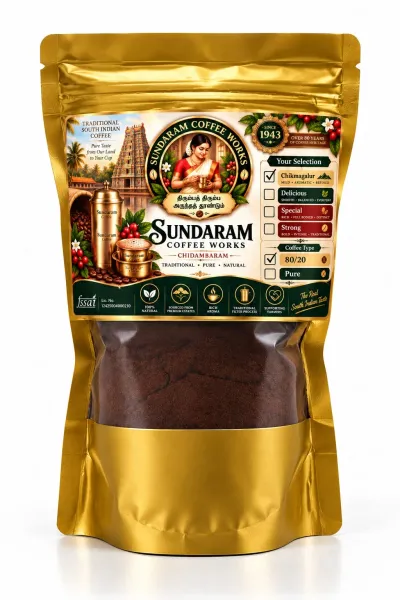
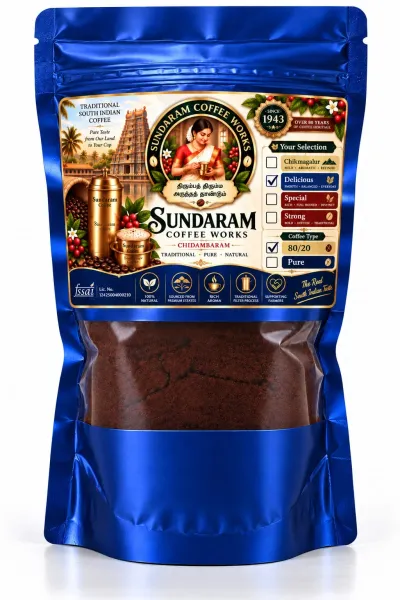
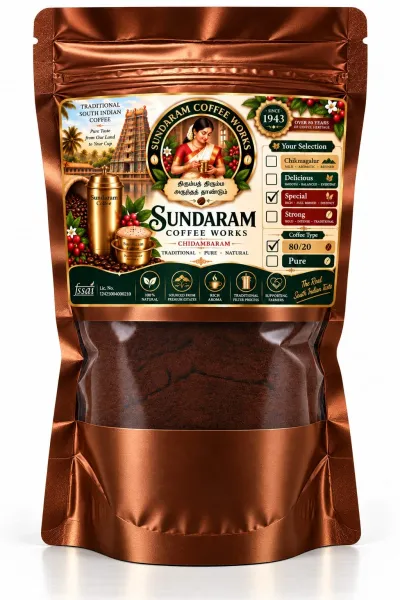
Our coffees, 80:20 with chicory
Ground and packed fresh, only after you order.
More essays
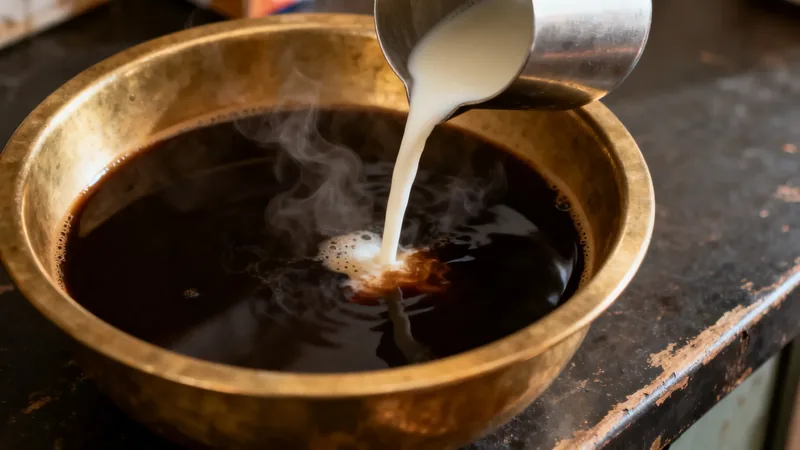 A case for drinking coffee out of metalCeramic and paper won the argument in most places coffee is drunk. Metal is still how South India takes its filter coffee, and that holdout is worth defending on its own terms.3 min read
 Reading a coffee pack properlyA coffee pack states more than most people read, and stays quiet about more than most people notice. Here is how to read all of it, not just the ratio.3 min read
 The same cup, eight thousand kilometres awayA filter coffee made far from South India follows the same steps as one made on Kasukadai Street. Worth asking honestly what actually stays the same when it travels, and what quietly doesn't.3 min read