A case for drinking coffee out of metal
Ceramic and paper won the argument in most places coffee is drunk. Metal is still how South India takes its filter coffee, and that holdout is worth defending on its own terms.
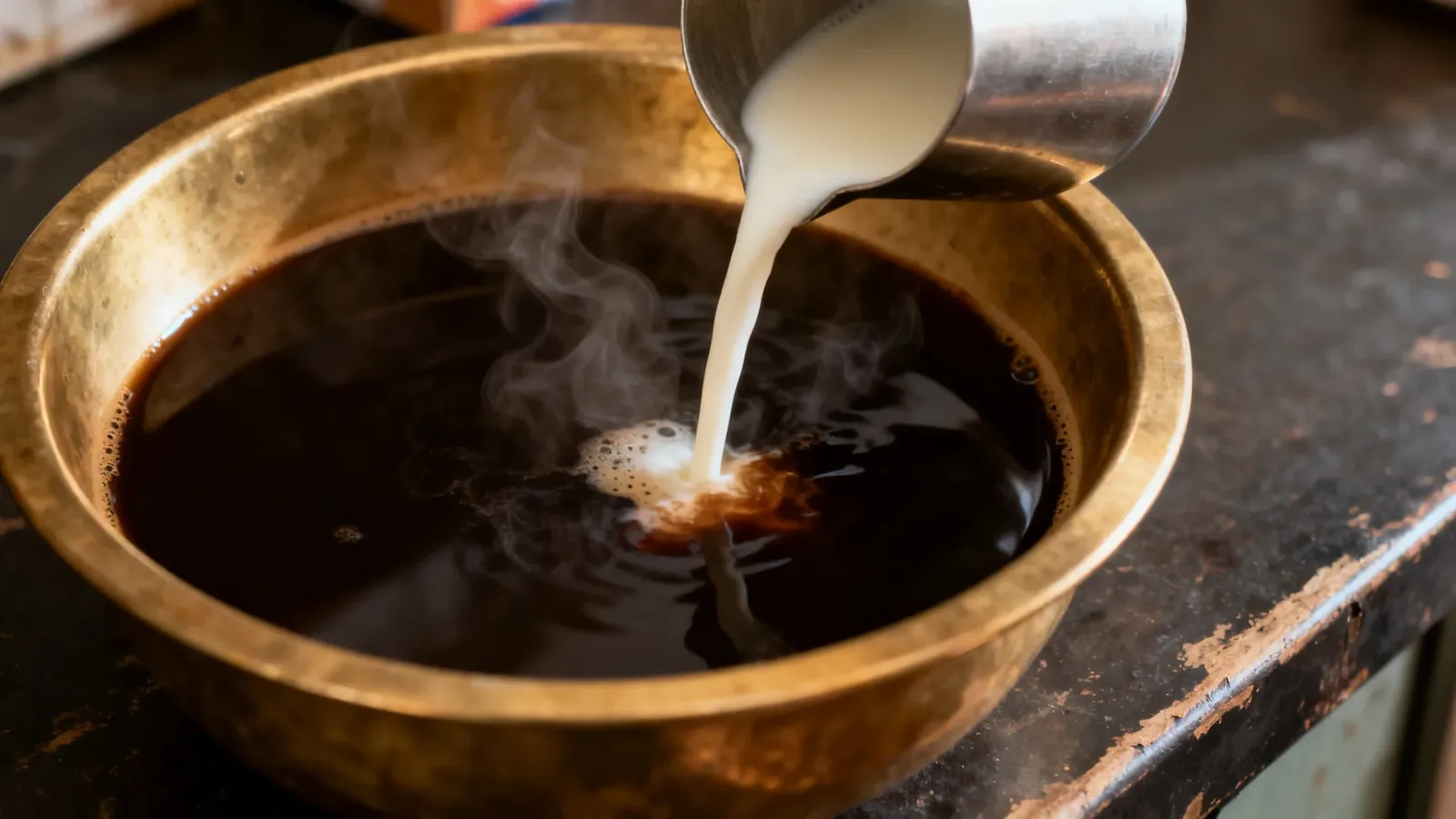
Most of the world settled on ceramic for coffee at home and paper or plastic-lined card for coffee on the move, and both choices share one property: they insulate. A ceramic mug and a paper cup are both, deliberately, bad conductors of heat, so the drink stays hot and the hand stays comfortable. The South Indian tumbler does the opposite. It is thin metal, chosen specifically because it conducts heat fast, and that looks like a mistake until you notice everything that fast conduction is actually doing.
The heat is the point, not the flaw
Because the tumbler conducts heat quickly, coffee poured into it straight from the filter is genuinely too hot to drink and the tumbler too hot to hold still. That forces the pour, back and forth into the dabarah, which is not a flourish added on top of the drink but the mechanism that makes the drink drinkable at all: it cools the coffee across a long thin stream, works air into the milk, and brings the whole thing down to a temperature and texture that a still vessel would take much longer to reach on its own. A material chosen for insulation would remove the reason for the pour entirely. The metal is not despite the ritual. It is what causes it.
Take away the metal's speed and there is no longer a reason to pour. The material and the ritual are the same decision.
What metal does not do
Metal also does not do several things ceramic and paper both do, quietly, over time. It does not absorb odour or flavour from what has been in it before, which matters in a vessel that is washed and reused daily rather than replaced. It does not stain the way a porous ceramic glaze can. And unlike paper or a plastic-lined cup, a well-made metal tumbler is not designed to be thrown away after one use; it is built to survive years of exactly this treatment, poured hot, cooled, washed, poured again, without degrading. Against a culture of disposable cups, a vessel that is chosen precisely because it will outlast thousands of pours is a genuinely different proposition, not just a different look.
A material that suits hospitality
There is a practical case here too. Metal tumblers are light, stack easily, and do not chip the way ceramic does under the kind of daily handling a household or a shop counter gives them. A stack of them takes up a fraction of the space a matching set of mugs would, and they can be handed round, refilled and rinsed in a rhythm that a breakable, insulated mug would not tolerate nearly as well. None of that is romantic. It is closer to why a restaurant kitchen reaches for stainless steel over porcelain when things have to move fast and survive being dropped.
Put together, the case for metal is not sentimental. It is that the material does real, specific work: it forces the cooling pour that makes the coffee drinkable, it survives being reused indefinitely instead of thrown away, and it suits a way of serving coffee that involves handing cups back and forth rather than setting them down and leaving them. Ceramic and paper solved a different problem for a different habit. Metal solved this one, and there was never a good reason to swap it out just because most of the world went the other way.
From the shop
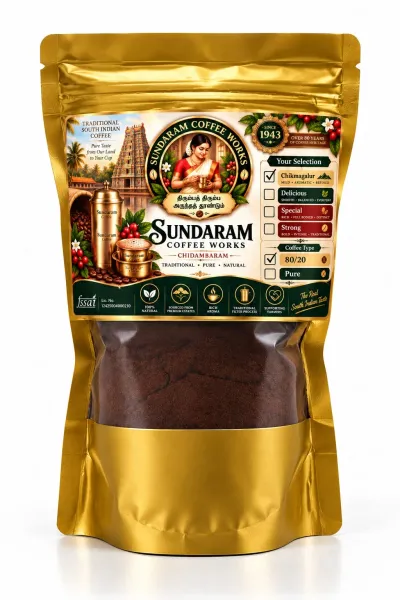
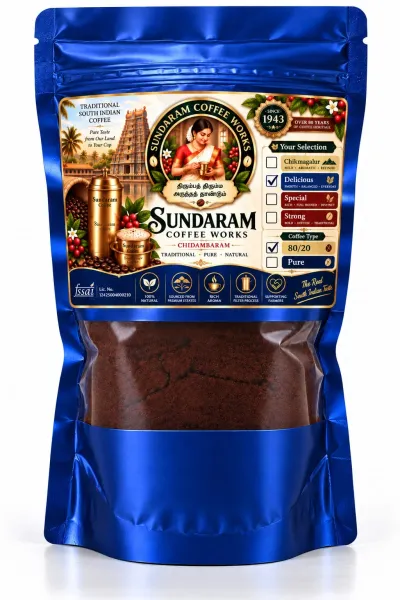
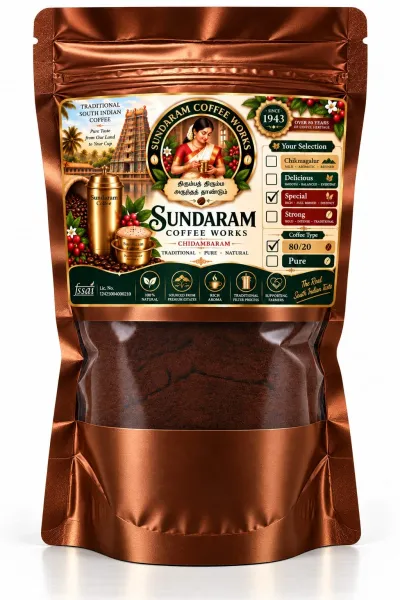
Our coffees, 80:20 with chicory
Ground and packed fresh, only after you order.
More essays
 Reading a coffee pack properlyA coffee pack states more than most people read, and stays quiet about more than most people notice. Here is how to read all of it, not just the ratio.3 min read
 The same cup, eight thousand kilometres awayA filter coffee made far from South India follows the same steps as one made on Kasukadai Street. Worth asking honestly what actually stays the same when it travels, and what quietly doesn't.3 min read
 What a small shop can actually doBeing small is not a marketing position. It changes what is genuinely possible, in both directions, and the honest version of that argument has to include what a small shop cannot do.3 min read