The same cup, eight thousand kilometres away
A filter coffee made far from South India follows the same steps as one made on Kasukadai Street. Worth asking honestly what actually stays the same when it travels, and what quietly doesn't.
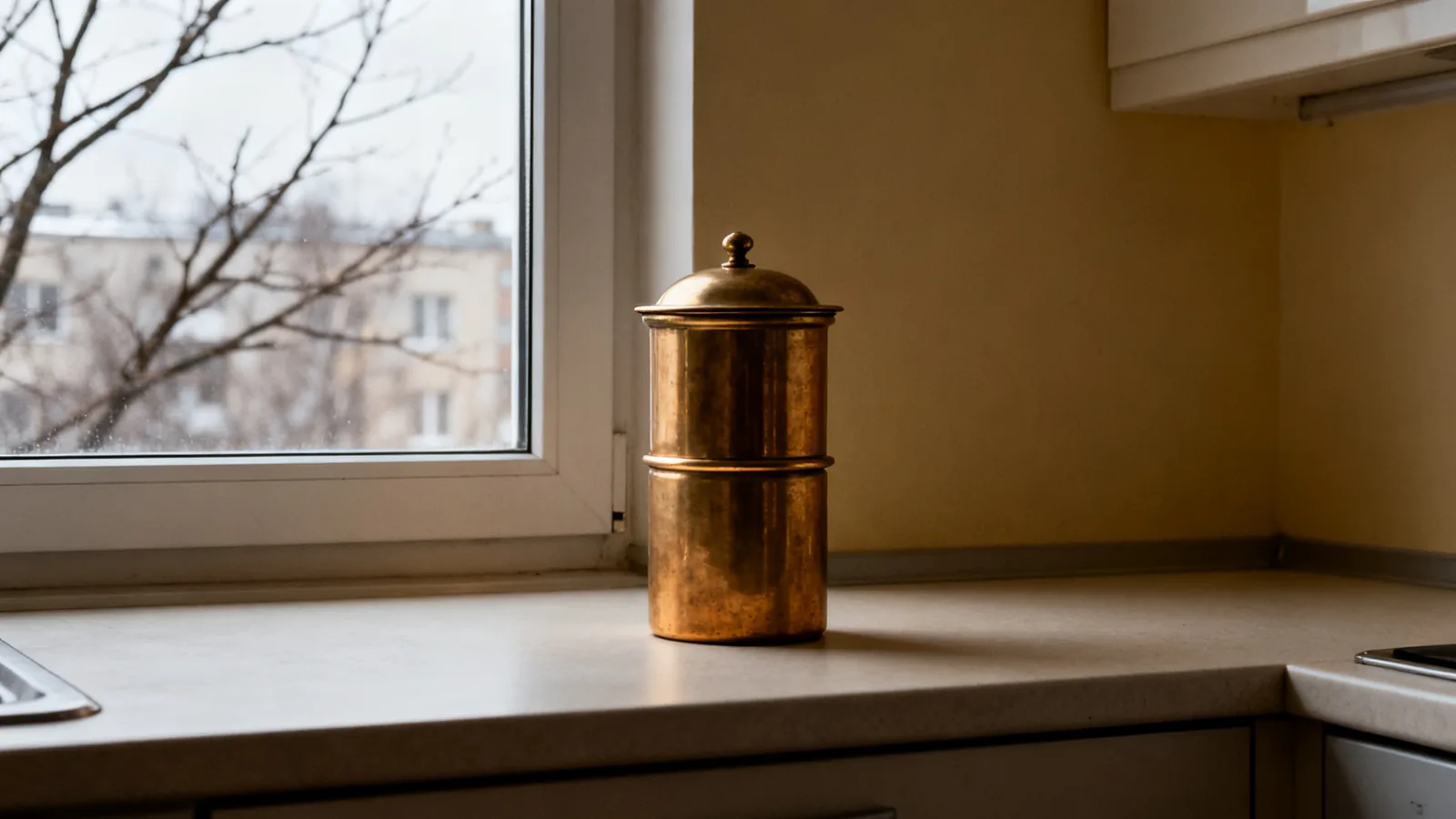
The method travels remarkably well. A metal filter takes up almost no space in a suitcase, needs no electricity and no special skill beyond what anyone who grew up making the coffee already has. That is a large part of why filter coffee shows up, largely unchanged in its steps, in kitchens thousands of kilometres from where the habit was formed. The sequence, coffee into the upper chamber, water over it, the long drip, the pour between tumbler and dabarah, does not require South India to work. It only requires the filter itself and someone who knows the rhythm.
What actually stays the same
The mechanics are identical wherever the filter is used. Gravity works the same everywhere. The chemistry of hot water pulling flavour out of ground coffee does not care which country the kitchen is in. And the twenty minutes of waiting, the part of the ritual that has nothing to do with geography at all, reproduces itself exactly, because it was never about the place. It was about the method, and the method is portable in a way that very few food traditions are.
The filter does not know it has left home. The milk usually does.
What changes without anyone deciding to change it
What shifts is everything the method depends on that was never written down as a rule, because it never had to be. Milk fat content, and therefore how it froths and how much body it lends the cup, varies a great deal between what was available at home and what is on a supermarket shelf abroad. Water hardness varies too, and it quietly changes how the decoction extracts. Coffee itself, if it is not carried from home or sourced from a specialist supplier, is often bought locally and does not always match the character of what a household grew up on, which means the same method, run with unfamiliar milk and unfamiliar coffee, produces a cup that is recognisably the same drink and quietly not the same cup.
People adjust for this without necessarily naming it as adjustment. A little more milk here, a slightly finer grind there, more decoction to compensate for a coffee that tastes thinner than expected. None of it is written down anywhere, because the original version was not written down either. It was simply learned by hand, in a kitchen, and it gets re-learned by hand in a new one, against new ingredients.
What does not travel at all
We do not ship coffee internationally, so for a lot of people the coffee itself does not travel with the filter; what travels is the equipment and the method, carried as luggage, and the coffee gets sourced wherever the kitchen ends up. That is an honest limit, not a workaround, and it means the diaspora version of this cup is, structurally, always a slightly different cup than the one made close to where the coffee itself is grown and blended. That is not a loss exactly. It is closer to a translation: faithful to the method, necessarily different in the details, because a translation that changed nothing would not actually be a translation of anything.
What we can do is deliver anywhere in India. If you live abroad, you can order to a family address at home, so the coffee is waiting in the kitchen you grew up in, or comes back with you in your luggage.
From the shop
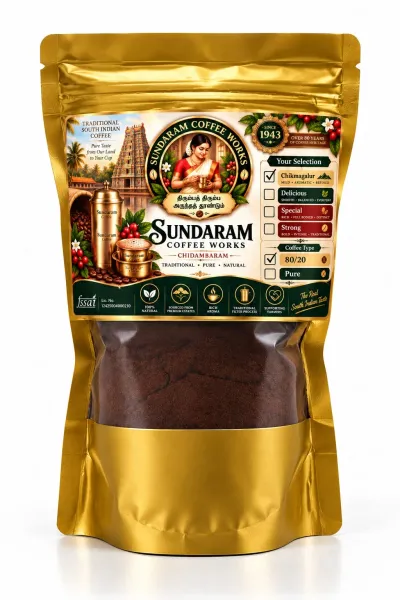
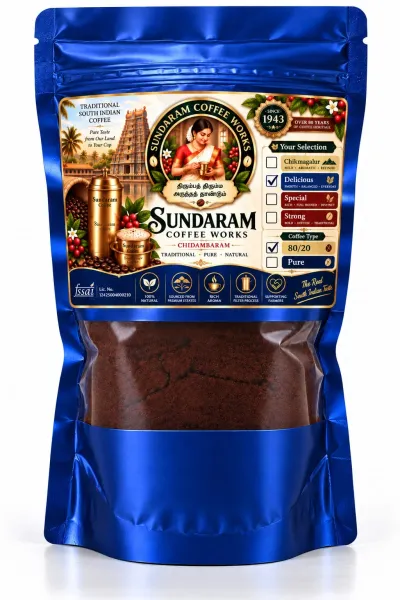
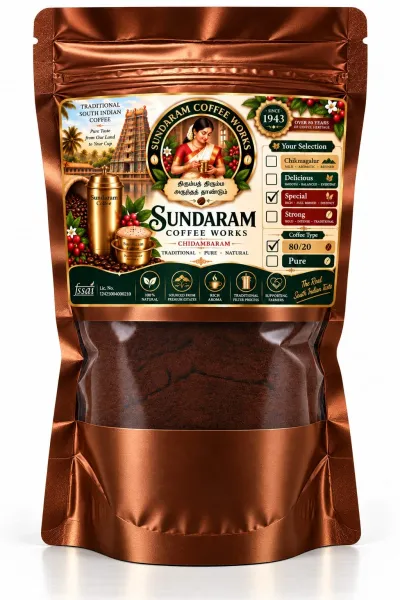
Our coffees, 80:20 with chicory
Ground and packed fresh, only after you order.
More essays
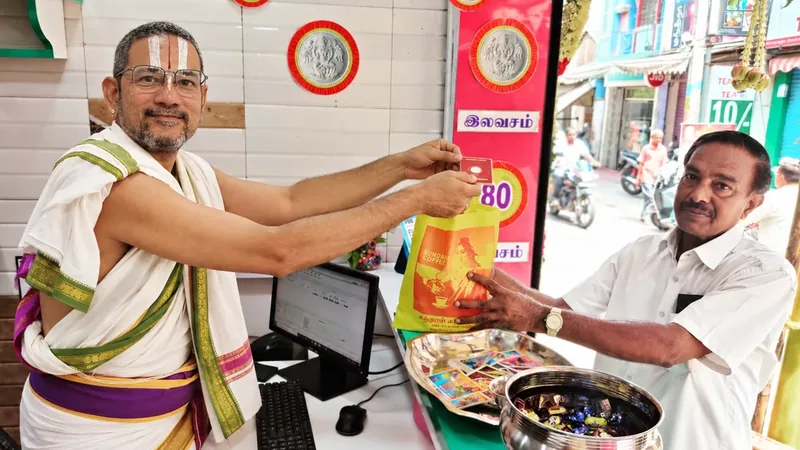 What a small shop can actually doBeing small is not a marketing position. It changes what is genuinely possible, in both directions, and the honest version of that argument has to include what a small shop cannot do.3 min read
 Chicory's two livesIn parts of Europe, chicory in coffee is remembered as a wartime substitute. In South Indian filter coffee, many people drink it by choice.2 min read
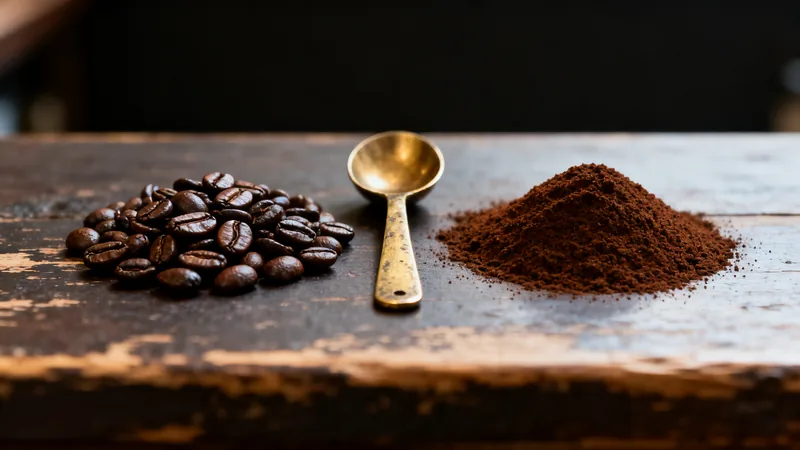 What “fresh” actually promisesAlmost every coffee pack claims to be fresh, and almost none of those claims can be checked by the person holding the pack. Here is what the word can honestly stand behind.3 min read