What “fresh” actually promises
Almost every coffee pack claims to be fresh, and almost none of those claims can be checked by the person holding the pack. Here is what the word can honestly stand behind.
"Fresh" is one of the most confident words on a coffee pack and one of the least checkable. A buyer standing in front of two packs, one printed with "freshly roasted" and one without it, has no way to test which is actually closer to its roast date. The word is doing the work of a fact without carrying the obligations of one, and it is worth separating what "fresh" can honestly promise from what it merely implies.
What can be verified, and what cannot
A roast date, printed and dated, is a checkable claim. So is a packing date. So is a statement about what happens between an order and a delivery. "Fresh" on its own is not checkable at all: it carries no date, no process and no way to be disproven, which is exactly why it survives on so many packs regardless of what is actually inside them. A claim that cannot be falsified is not lying, but it is not really saying anything either.
A date on a pack can be checked. The word "fresh" by itself cannot.
Where the real damage happens
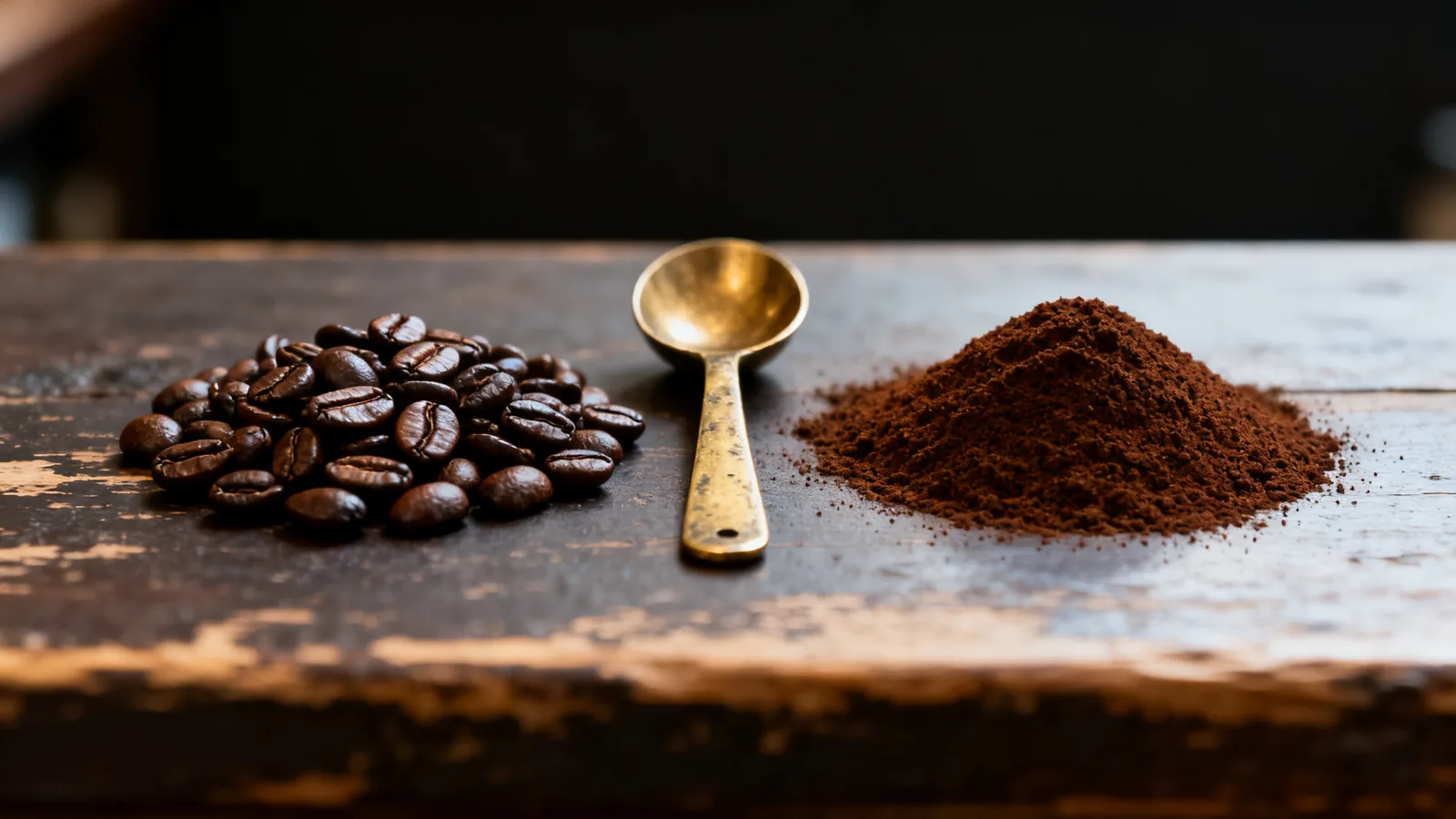
The point at which coffee actually starts losing what makes it worth drinking is grinding, not roasting. A whole roasted bean keeps its aroma reasonably well because so little of it is exposed to air. The moment it is ground, its surface area multiplies and the same property that lets hot water pull flavour out quickly also lets aroma escape quickly and lets oxygen in. A pack that says "freshly roasted" but was ground weeks before it reached the shelf has already lost a meaningful share of what that phrase is implying, no matter how true the roasting claim is.
This is why the more useful question to ask a shop is not "is this fresh" but "when was this ground," and specifically whether it was ground before or after the order existed. That is a question with a factual answer, and it is the one that actually tracks what a buyer is trying to find out.
What we can actually say
At Sundaram, orders are ground and packed after the order is placed. That is a specific, checkable claim about sequence, not a vague one about quality, and it is worth being precise about what it does and does not mean. It means the coffee in a pack has not been sitting ground on a shelf. It does not automatically mean the beans themselves were roasted that same day: roasting happens in the shop on its own schedule, and only bulk orders are roasted specifically after the order is placed. Collapsing those two claims into one another would be the same mistake as printing "fresh" without a date behind it, and we would rather keep the distinction than blur it into something that sounds better.
- A roast date is checkable. "Freshly roasted" alone is not.
- Grinding, not roasting, is where most of the loss actually happens.
- "Ground and packed to order" is a claim about sequence, and it is different from "roasted to order."
- What a buyer can check: the dates printed on the pack, and a straight answer to “when was this ground?”
None of this is an argument that freshness does not matter. It matters a great deal, which is exactly why the word deserves more scepticism than it usually gets. The honest version of a freshness claim is always narrower and more specific than "fresh," and a pack that is willing to say the narrower thing is telling you more, not less.
From the shop
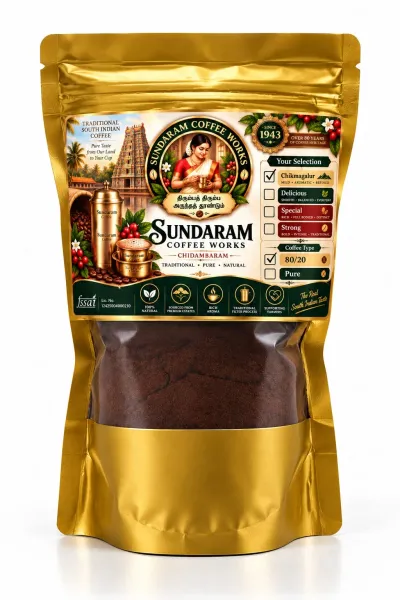
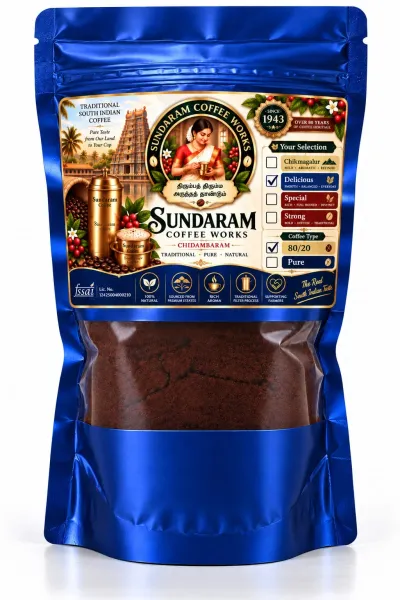
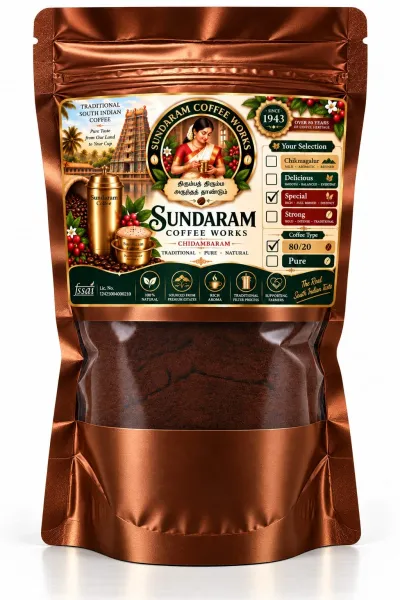
Our coffees, 80:20 with chicory
Ground and packed fresh, only after you order.
More essays
 Objects built to be pouredSet aside what the tumbler and dabarah are used for and judge them only as design, and they turn out to be solving a harder problem than a cup and saucer ever had to.3 min read
 Why the hand filter is still in the kitchenEspresso machines and electric filter-coffee makers are easy to buy, and some homes use them. Many South Indian kitchens still reach for the plain metal filter first, and taste is only part of why.3 min read
 The twenty minutesFilter coffee is one of the few things left in a house that refuses to be rushed, and that refusal is doing more work than the coffee itself.3 min read