Aroma, and where it goes
Roasting fills the bean with volatile aromatic compounds and with carbon dioxide. Volatile means exactly what it sounds like: those compounds want to leave. Grinding lets them.
Most of what you experience as the taste of coffee is actually smell. The tongue reports sweet, sour, salty, bitter. Everything else, all of the complexity, arrives through the nose.
Why grinding changes everything
A whole roasted bean has very little surface area exposed to the air. Grind it and you multiply that surface enormously. The same property that lets hot water extract flavour quickly also lets aroma escape quickly, and lets oxygen in.
Ground coffee starts losing what makes it worth drinking from the moment it is ground.
What you can actually do
- Keep it closed. Air is the problem.
- Keep it away from heat and direct light.
- Keep it out of the fridge door, where it meets moisture and other smells every time the door opens.
- Buy an amount you will actually finish rather than the largest pack available.
This is why Sundaram grinds and packs after an order is placed rather than in advance.
From the shop
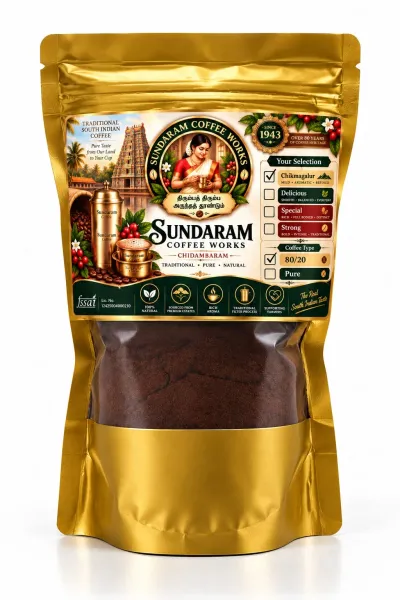
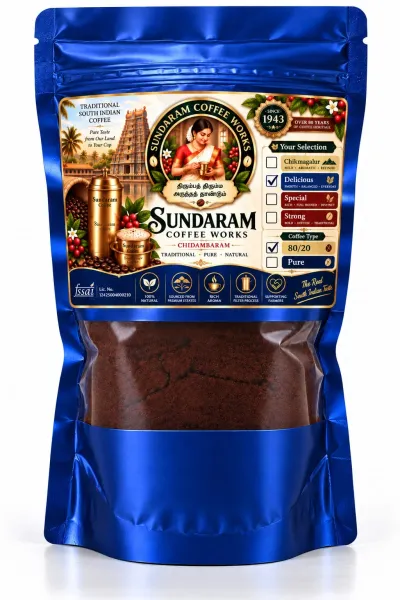
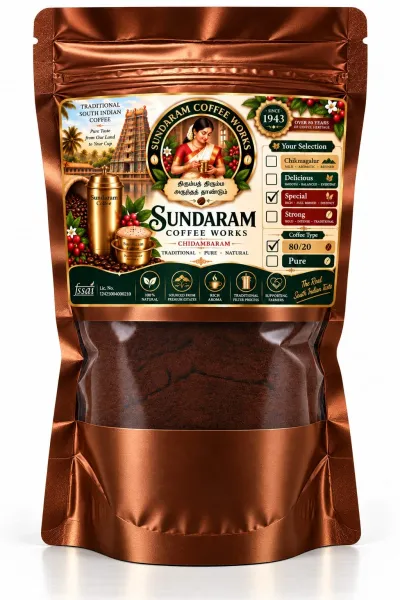
Our coffees, 80:20 with chicory
Ground and packed fresh, only after you order.